 비전 아포코리아
Documents by Country · United States
One Basic Certificate Bound for the U.S., and the Precious Life Recorded Inside It
Countless documents pass through our hands at ApoKorea every day. Even so, each and every document we handle never feels like just a stack of paper.
That's because each one carries someone's fresh start, the excitement and nerves of heading to an unfamiliar country, and heartfelt hopes, all woven into it.
This time, the document we handled an apostille agency request for was a detailed Basic Certificate for submission in the U.S. Today we'd like to share the journey of how a document holding the earliest record of a person's life in Korea gets ready to cross the Pacific.

Translating this single document into English is more than simple translation — it's like interpreting someone's life with care. Not even one letter of the name's spelling, date of birth, or registered domicile can be treated carelessly.
So that the receiving institution in the U.S. can trust it without a single error, we transcribed it neatly and carefully, with the utmost attention.
1. The Care Put Into Every Word (Translation)
A Basic Certificate holds the earliest record of a person's life in Korea. When translating this document into English, accuracy is what we focus on most. Items like the name, date of birth, and registered domicile must exactly match the passport to prevent resubmission requests overseas.
Translation is about converting language, but within it lies the responsibility of accurately preserving a person's identity and history.
Down to a single letter of the name's spelling or the registered domicile,
we transcribe it carefully and precisely.
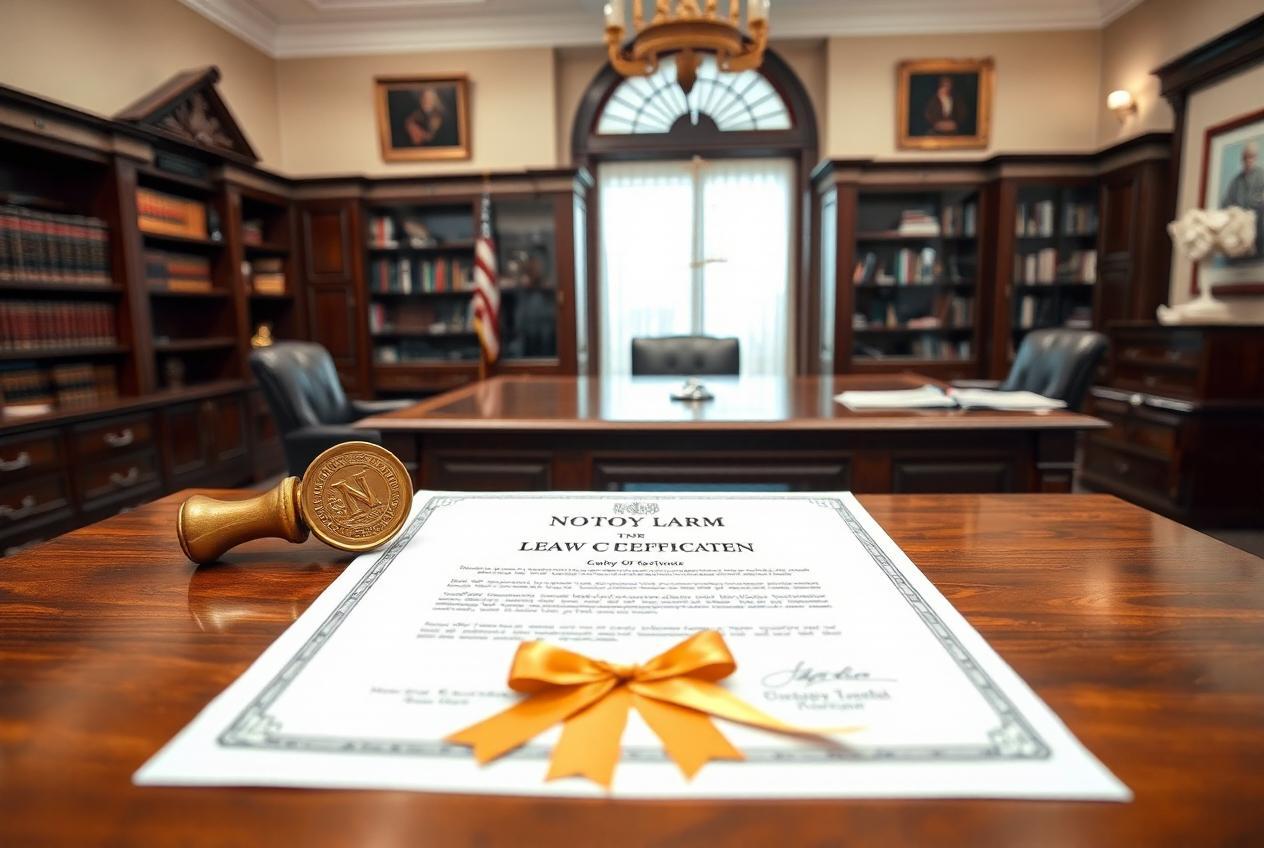
Certified translation adds legal weight to a document, together with a red seal.
2. Adding the Weight of Trust (Certified Translation by a Notary Office)
The carefully prepared translation goes through a certified translation (Notarial Certificate) step at a notary office. "This translation matches the original completely and was honestly prepared by a qualified translator."
Every time a legally binding red seal and a golden notarial certificate are added, we at ApoKorea feel a deep sense of responsibility, knowing we're serving as a reliable support for our client's meaningful journey.
3. Ready to Cross the Pacific at Last (Apostille Agency Request and Issuance)
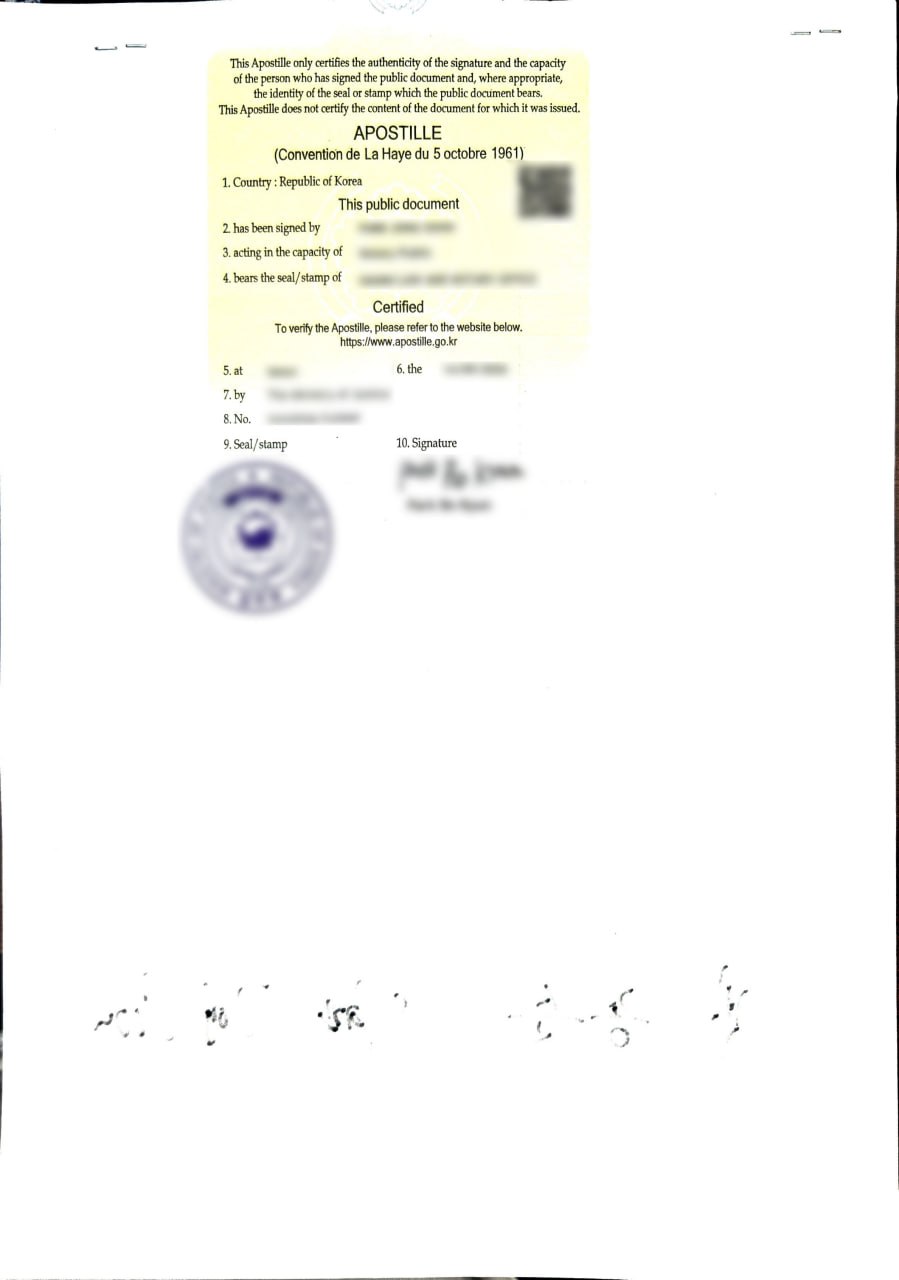
Once notarized, the document goes through an official issuing institution for apostille certification as the final step. The moment an apostille certificate bearing a unique number and QR code is attached to the document, it is finally ready to cross the Pacific and carry the same legal effect in the U.S. as an official Korean document.
When we personally handle the apostille agency request and finally receive the completed apostille certificate, we feel a warmth in our hearts — knowing we've turned a client's unseen worry into a sense of relief.
Wondering whether your documents need translation, certified translation, or an apostille?
Check What's Needed🌸 A Small Note of Care from ApoKorea (Tips for Preparing U.S.-Bound Documents)
For everyone out there worrying about preparing documents for U.S. submission, here are a few small tips we always make sure to cover.
Check these first for U.S.-bound documents.
- The importance of the 'detailed' certificate — U.S. government offices and immigration authorities (USCIS) most often require the 'detailed' Basic Certificate that includes all life-event changes.
- Matching your passport spelling — when translating into English, there must be zero difference in spelling or spacing from your passport's English name, or you may be asked to resubmit locally.
- Professionalism that respects timing — documents for overseas submission require careful attention to validity periods and procedures, so preparing them with a trusted professional partner is the easier path.

Even though this document is heading to a faraway place like the U.S., we hope our warmth and sincerity at ApoKorea travel with it every step of the way.
Basic Certificates, Family Relations Certificates, Marriage Relations Certificates, and all of your other precious documents heading out into the world — ApoKorea will serve as the most careful and reliable bridge for them.
To summarize: confirm the Basic Certificate (detailed) issuance → English translation → certified translation at a notary office → apostille agency request and issuance → shipment to the U.S. receiving institution. That's the order it follows.
Feel free to reach out anytime.
We'll help you check exactly what procedures you need.
Frequently Asked Questions
- Which Basic Certificate is needed for U.S. submission?
- U.S. government offices and immigration authorities (USCIS) often require the 'detailed' Basic Certificate, which shows all life-event changes. However, required formats can differ by receiving institution, so it's best to confirm in advance.
- Are translation and certified translation the same procedure?
- No, they are different. Translation is the work of converting the original into English, while certified translation is the process where a notary office confirms the translation matches the original and was prepared by a qualified translator.
- If I only get a certified translation, can I use it in the U.S. right away?
- It depends on the receiving institution. A certified translation alone is sufficient in some cases, but some institutions also require an apostille, so it's best to check the requirements in advance.
- Why is an apostille necessary?
- An apostille is an international certification that allows a document issued or notarized in Korea to be recognized as an official document abroad as well. Since the U.S. is a member of the Apostille Convention, a document's validity can be recognized with an apostille alone, without consular authentication.
- What does an "agency request" mean?
- It means we handle the apostille and other certification application procedures at government offices and issuing institutions on the applicant's behalf, saving time and effort for those who find it difficult to visit in person.
- What if it's difficult to prepare on my own?
- Tell us the documents you need, the purpose of submission, and the receiving institution, and we'll safely handle everything from translation to certified translation to apostille agency requests.
⚠️ This article is intended to provide general information on translation, certified translation, and apostilles for U.S.-bound documents. Please be sure to check the latest guidance from the receiving institution as of your application date for required formats and procedures.